

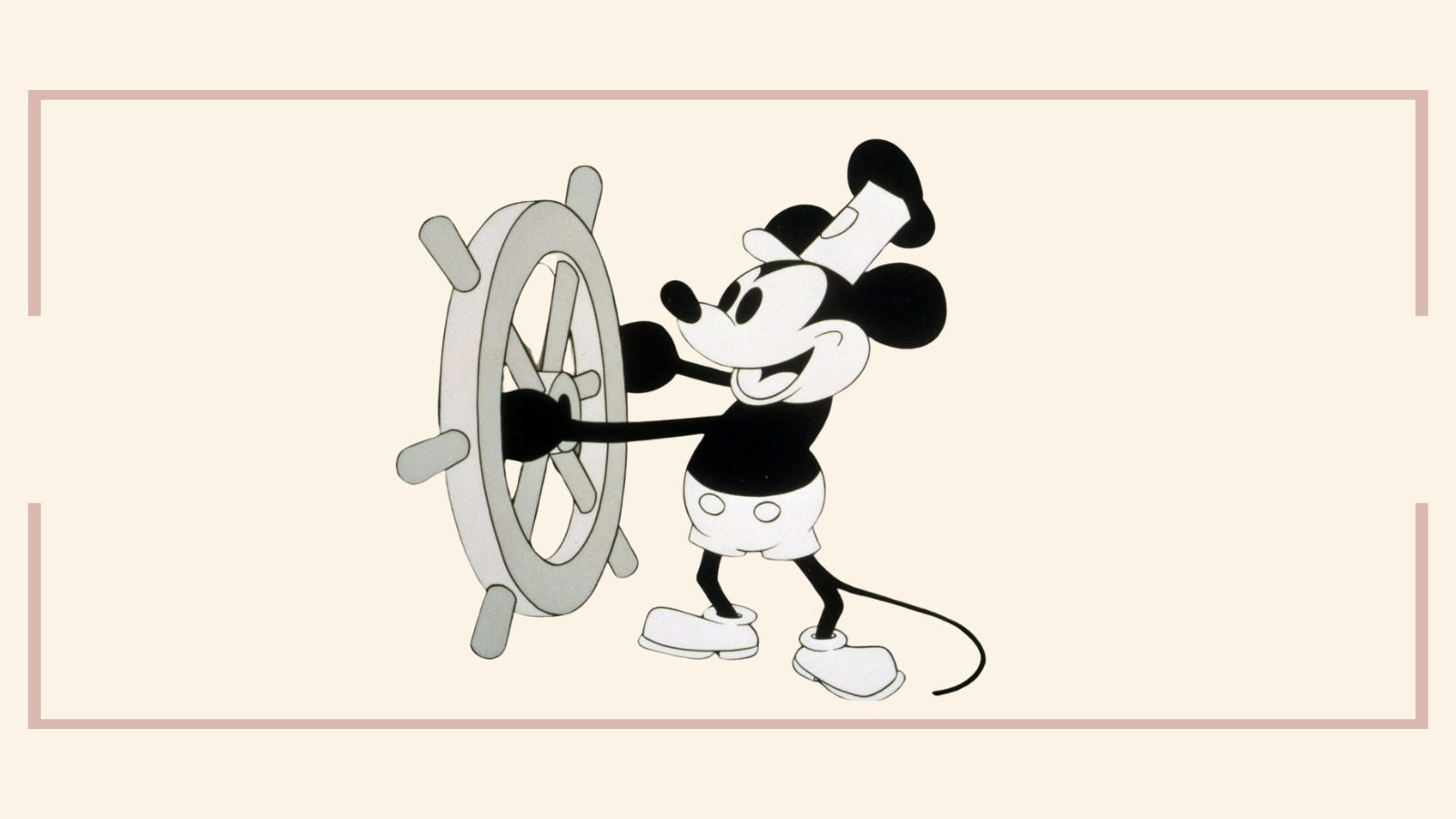
On January 1, 2024, the Steamboat Willie version of Mickey Mouse became free for anyone to use legally. This didn’t happen because of an internal paperwork failure or defeat in a lawsuit. It happened because the copyright expired.
This moment raised a bigger question: what does it actually mean for something to enter the public domain, how does it work, and why does it take so long?
What the public domain means legally
When a work is in the public domain, it is no longer protected by copyright law. Anyone can reproduce it, adapt it, remix it, or build entirely new works from it with no permission, no fees, and no lawsuit risk.
Public domain doesn’t mean a work has no value, it just means the law has decided that the public now has the right to use it.
This is why classic novels, films, and characters continue to show up in new adaptations decades, or even centuries, after they were first created. (Pride and Prejudice and Zombies, Persuasion - Netflix Series)
Why the works entering the public domain now are so old
One of the most surprising things about the public domain is how slowly it grows. Works entering the public domain today were created nearly a century ago, which says a lot about how long copyright lasts.
In 1998, Congress enacted the Bono Act. This extended the duration in which a creator holds the copyright for their work. For individuals, a copyright lasts the author’s lifetime plus 70 years. For corporations, the copyright lasts 120 years after creation or 95 years after publication, whichever is shorter.
That’s why works from the early 20th century are only now becoming free to use. Copyright lasts so long that what’s entering the public domain today often feels like ancient history, even though many of these works still shape modern culture.
Mickey Mouse as Steamboat Willie
The recent attention around Mickey Mouse is a perfect example of how this works. Early versions of Mickey (specifically the version seen in Steamboat Willie) are now in the public domain. But that doesn’t mean all versions of Mickey are suddenly free for anyone to use.
Copyright protects specific expressions, not general ideas. So while the 1928 version of Steamboat Willie is fair game, Disney’s modern Mickey (updated design, personality, storyline, etc.) remains fully protected. It’s a good reminder that copyright law is often much narrower than people assume.
What happens when creators die?
Another common misconception is that copyright disappears when a creator dies.
When a creator dies, their copyright transfers to their estate, which is usually family members or whoever the creator names in their will. Those rights can be enforced just like the creator would have enforced them during their lifetime.
This is why the children of Marvin Gaye were able to bring copyright infringement claims in cases involving songs like “Blurred Lines” and “Thinking Out Loud.” When Marvin Gaye died, his music still had decades of copyright protection left. That protection didn’t vanish — it passed to his heirs.
Copyright law is designed to allow families and estates to benefit from a creator’s work long after the creator is gone, until those rights eventually expire.
Why some works are everywhere
This long copyright timeline also explains why certain works are constantly adapted and reimagined. Jane Austen’s Pride and Prejudice is firmly in the public domain. Anyone can publish it, adapt it, modernize it, or reinterpret it without legal consequences.
That’s why we see endless versions of the same story across books, films, TV shows, and even social media. Once a work enters the public domain, it becomes a shared cultural resource.
Why copyright doesn’t last forever
At this point, it’s fair to ask: why shouldn’t copyright last forever?
Copyright is built on balance. Creators deserve rewards for their work, but not indefinitely. Exclusive rights incentivise people to write books, compose music, and make films. But eventually, those works need to return to the public so new creators can build on them.
If copyright never expired, creativity would stagnate. Every new story, song, or film would require permission from someone else — eventually someone far removed from the original creator. The Supreme Court acknowledged this tension in Eldred v. Ashcroft (2003) when it upheld Congress’s authority to extend copyright terms but recognized that a never-ending copyright would conflict with the Constitution’s goal of promoting progress.
Copyright is a bargain: creators get exclusive rights for decades, and then society gets access forever.